

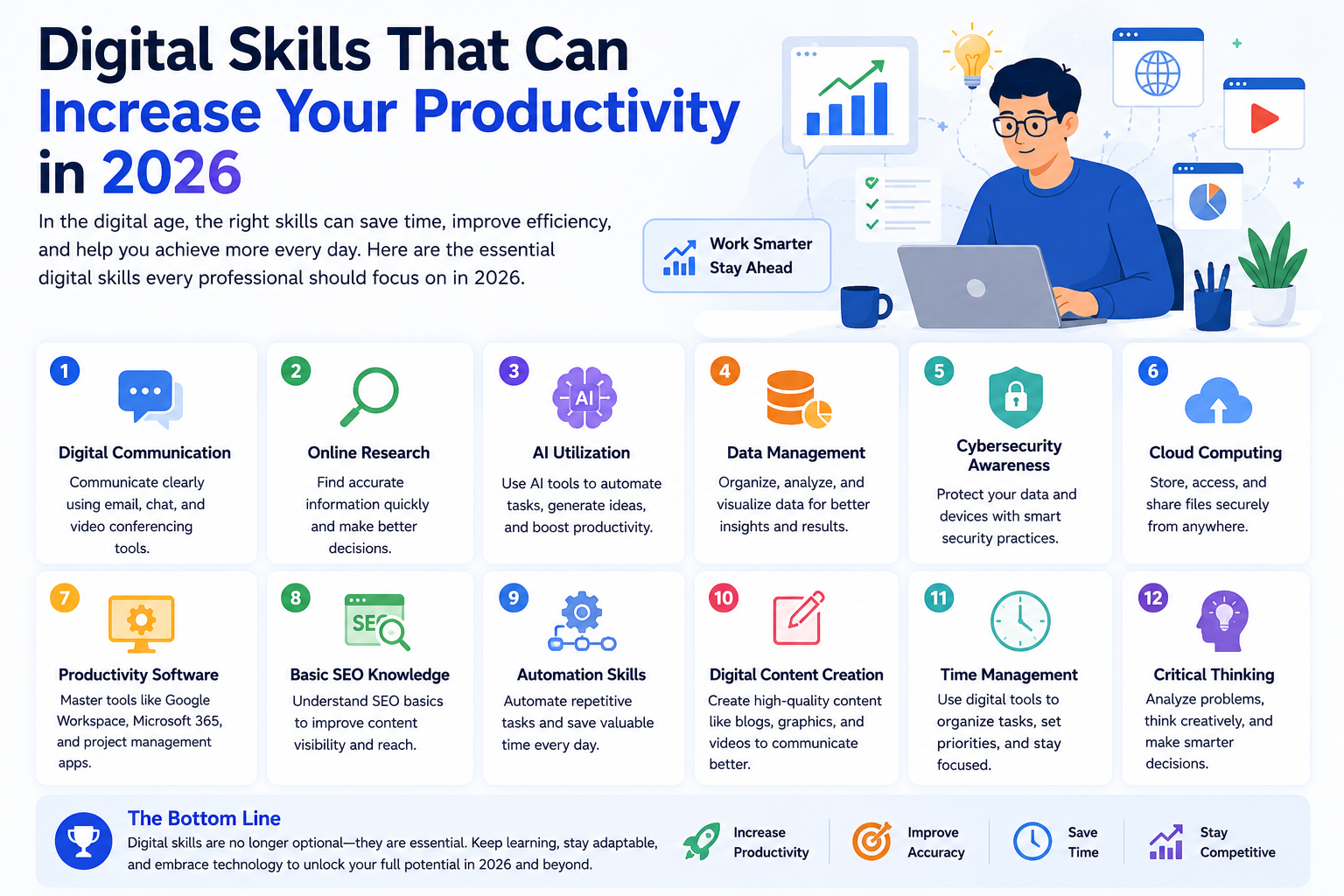
Digital Skills That Can Increase Your Productivity in 2026
Introduction
Technology continues to transform the way people work, learn, communicate, and manage daily tasks. As businesses become increasingly digital and remote work remains common, developing the right digital skills has become more important than ever.
In 2026, productivity is no longer just about working harder. It’s about working smarter using modern tools, automation, and digital platforms. Individuals who develop relevant digital skills can save time, improve efficiency, and create better opportunities for personal and professional growth.
This article explores the most valuable digital skills that can help increase productivity in 2026 and beyond.
Why Digital Skills Matter
Digital skills are no longer limited to IT professionals or software developers. Nearly every profession now relies on technology.
Benefits of strong digital skills include:
- Faster task completion
- Better communication
- Improved problem-solving
- Increased employability
- Enhanced business efficiency
The ability to adapt to new technologies is becoming a key competitive advantage.
1. Digital Communication Skills
Effective communication remains one of the most important workplace skills.
Professionals should be comfortable using:
- Email platforms
- Video conferencing tools
- Team collaboration software
- Messaging applications
Clear digital communication reduces misunderstandings and improves teamwork.
2. Online Research Skills
The internet contains vast amounts of information, but finding reliable and accurate data requires skill.
Strong research abilities help professionals:
- Verify information
- Solve problems quickly
- Make informed decisions
- Stay updated with industry trends
Learning advanced search techniques can significantly improve productivity.
3. Artificial Intelligence (AI) Utilization
AI tools are becoming part of everyday workflows.
Professionals can use AI for:
- Content creation
- Data analysis
- Customer support
- Brainstorming ideas
- Task automation
Understanding how to effectively use AI tools can save hours of work each week.
4. Data Management Skills
Organizations generate enormous amounts of data.
Basic data management skills include:
- Organizing information
- Using spreadsheets
- Sorting records
- Data visualization
These skills help individuals make better decisions and manage information efficiently.
5. Cybersecurity Awareness
Cyber threats continue to increase every year.
Every professional should understand:
- Password security
- Phishing detection
- Safe browsing practices
- Data protection
Good security habits prevent costly mistakes and protect valuable information.
6. Cloud Computing Skills
Cloud-based platforms have transformed modern work environments.
Popular cloud services include:
- Google Drive
- Microsoft OneDrive
- Dropbox
Cloud skills help users:
- Access files anywhere
- Collaborate efficiently
- Reduce dependency on physical storage
7. Productivity Software Mastery
Professionals should be comfortable using productivity tools such as:
- Microsoft Office
- Google Workspace
- Project management software
- Online collaboration tools
Knowing advanced features can significantly increase efficiency.
8. Basic Website and SEO Knowledge
Even non-technical professionals benefit from understanding:
- Website fundamentals
- Search engine optimization
- Online visibility
- Content publishing
These skills are valuable for business owners, marketers, freelancers, and entrepreneurs.
9. Automation Skills
Automation is becoming a major productivity driver.
Examples include:
- Automated emails
- Scheduled reports
- Workflow automation
- Task reminders
Learning how to automate repetitive tasks can save considerable time.
10. Digital Content Creation
Content remains a powerful communication tool.
Useful skills include:
- Writing
- Graphic design
- Video creation
- Social media publishing
Professionals who can create digital content often communicate ideas more effectively.
11. Time Management with Digital Tools
Modern productivity tools help users organize tasks and priorities.
Examples include:
- Digital calendars
- To-do lists
- Project boards
- Time tracking software
Effective time management leads to higher productivity and reduced stress.
12. Critical Thinking and Problem Solving
Technology changes rapidly, making adaptability essential.
Professionals who combine digital skills with critical thinking can:
- Solve challenges faster
- Adapt to change
- Improve decision-making
This remains one of the most valuable skills in any industry.
Building Your Digital Skill Set
Improving digital skills does not require expensive education.
Effective methods include:
- Online courses
- Tutorials
- Practice projects
- Webinars
- Professional communities
Consistent learning often produces better results than intensive short-term study.
The Future of Digital Productivity
As technology continues to evolve, digital skills will become even more valuable.
Future trends include:
- AI-powered workflows
- Advanced automation
- Remote collaboration
- Data-driven decision-making
Professionals who embrace these changes will remain competitive and productive.
Conclusion
Digital skills are no longer optional. They have become essential tools for success in today’s technology-driven world. Whether you’re a student, freelancer, entrepreneur, or corporate professional, developing practical digital skills can improve efficiency, enhance career opportunities, and help you achieve more in less time.
The most productive professionals in 2026 will not necessarily be those who work the longest hours, but those who effectively leverage technology to work smarter. Investing in digital skills today is an investment in future productivity and long-term success.